

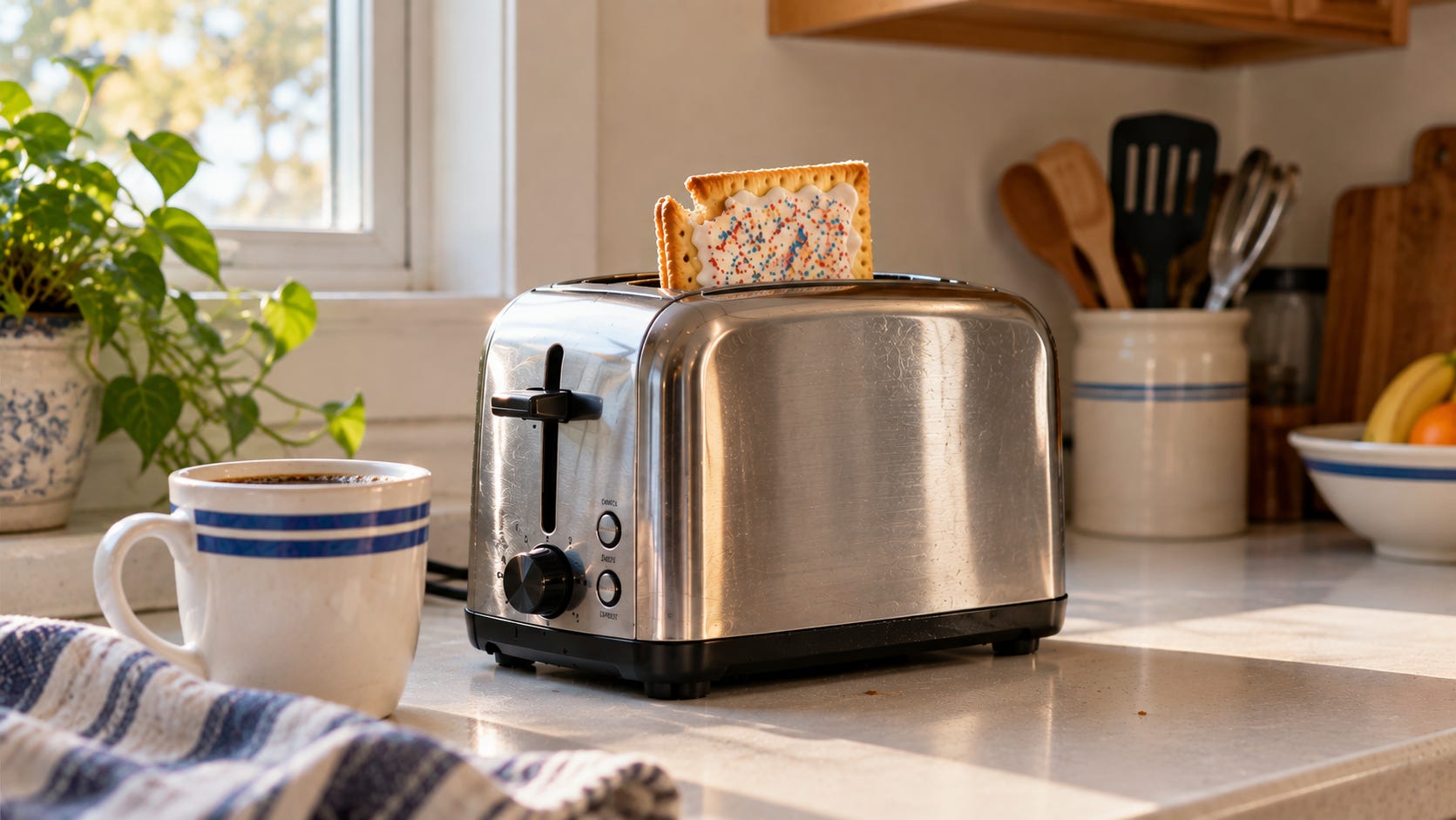
Tomorrow morning, millions of people will follow a familiar ritual. Grab a coffee, drop some bread into the toaster. Maybe a bagel. Perhaps a Pop-Tart. Then get on with the day.
We don’t often think of a toaster as part of a home’s infrastructure. But it is. One toaster can serve two people, four people, even an entire family.
Now, here’s a question. How can one toaster become two without adding a single person?
The answer is hiding in one of the most significant demographic changes happening around the world.
More people are living alone.
Two people sharing a home need only one toaster. When those same people establish separate households, suddenly there are two kitchens, two refrigerators, and potentially two toasters.
The population hasn’t changed. But the economics of the population have.
Solo Living Is Changing the Consumer Market
Living alone is hardly new. What’s changing is how common it has become.
According to the U.S. Census Bureau, America had 39.7 million one-person households in 2025. That’s ~30% of all households, compared with just 20% in 1975.
In Canada, one-person households became the country’s most common household arrangement in 2016. By 2021, they represented 29.3% of households.
Across the European Union, the number of single-adult households without children increased nearly 20% in just the last decade, while the total number of households grew just 6%. That’s more than three times the overall growth rate.
This is not simply a story about older people living alone. Young professionals, people delaying marriage, divorced adults, and people who simply prefer living independently are all part of a changing household landscape.
Here’s the thing: the implications reach far beyond the breakfast table.
Japan’s Demographic Paradox: Fewer People, More Households
Japan has been a favorite example of what happens when a country’s population shrinks. Fewer people, fewer consumers, presumably smaller markets. Except the arithmetic isn’t quite that simple.
Between 2015 and 2020, Japan’s population declined by nearly one million people. Yet the country added about 2.4 million private households. That’s not a forecast. It actually happened.
According to Japan’s Statistics Bureau, by 2020, 38.1% of Japanese private households were single-person households. The average household size had fallen to just 2.21.
Think about that for a moment. Japan had fewer people but more households.
A company looking only at population projections might see a shrinking market. A company examining household formation might see something quite different.
Both could be looking at accurate demographic data. Only one company might be asking the right question.
More Households, More Products
Look around your home. You’ll find a refrigerator, stove, microwave, washing machine, television, furniture, lamps, and a closet filled with Swiffers, brooms, and enough cleaning products to tackle almost anything.
Most households don’t need one of everything for every person living there.
Four people can share a refrigerator. Two can share a washing machine. An entire family can survive on one toaster, even if they occasionally argue over whose bagel goes in first.
But when one household becomes two, the number of people hasn’t necessarily changed. The number of homes to equip has. And this begins with the homes themselves.
More households can mean demand for more homes, condos, apartments, and the related number of kitchens, bathrooms, utility connections, and the infrastructure that supports them.
The implications extend from real estate development and construction to appliance manufacturing, utilities, retail, and consumer goods.
Of course, two households don’t necessarily purchase twice as much of everything. But products that were once shared may now be needed in two different places.
That’s a very different way of calculating potential market demand.
One-Person Households Don’t Mean One-Size-Fits-All
There’s another twist. Two refrigerators don’t necessarily mean two Sub-Zeros.
Perhaps one household wants a Sub-Zero and the other a modest single-door refrigerator. Or perhaps both want something entirely different.
The point isn’t simply that the number of potential purchases changes. The variety of products people want may change as well.
Housing is one example. Living alone doesn’t necessarily mean living small. One person might want a downtown apartment. Another might want a small suburban home. Still another might prefer a large house with room for guests, hobbies, or a home office.
The same applies inside the home. Different households may want appliances with varying capacities, furniture designed for different spaces, and products that offer different combinations of convenience, performance, and price.
Even Pop-Tarts aren’t immune. A household of five and a household of one may buy the same product, but they may prefer different package sizes, quantities, or shopping arrangements.
From the house itself to what’s inside the pantry, changing household composition can reshape both the number and the kinds of products a market demands.
The Market Forecasting Blind Spot: People vs. Households
Businesses spend considerable time studying population forecasts. How many people will live in a region, in a country? Will the population grow or decline? Where will consumers be concentrated? How old will they be?
All reasonable questions. But population is only part of the story.
A population of ten million people living in four million households represents a different market from ten million people living in five million households.
Same population. One million more households. That is potentially more front doors, more kitchens, more refrigerators, more toasters, and a greater variety of products to meet different household needs.
For manufacturers, developers, retailers, and investors, that difference matters.
Demographic change doesn’t always announce itself with a population boom or bust. Sometimes it arrives quietly, one new front door at a time.
The next time a market forecast lands on the desk of a CEO, investor, developer, or board director, there’s a question worth asking.
What happens to your market forecast when you stop counting people and start counting households?